Tablecloth Washing Guide – Washing, Ironing & Stain Removal
Recommended Care
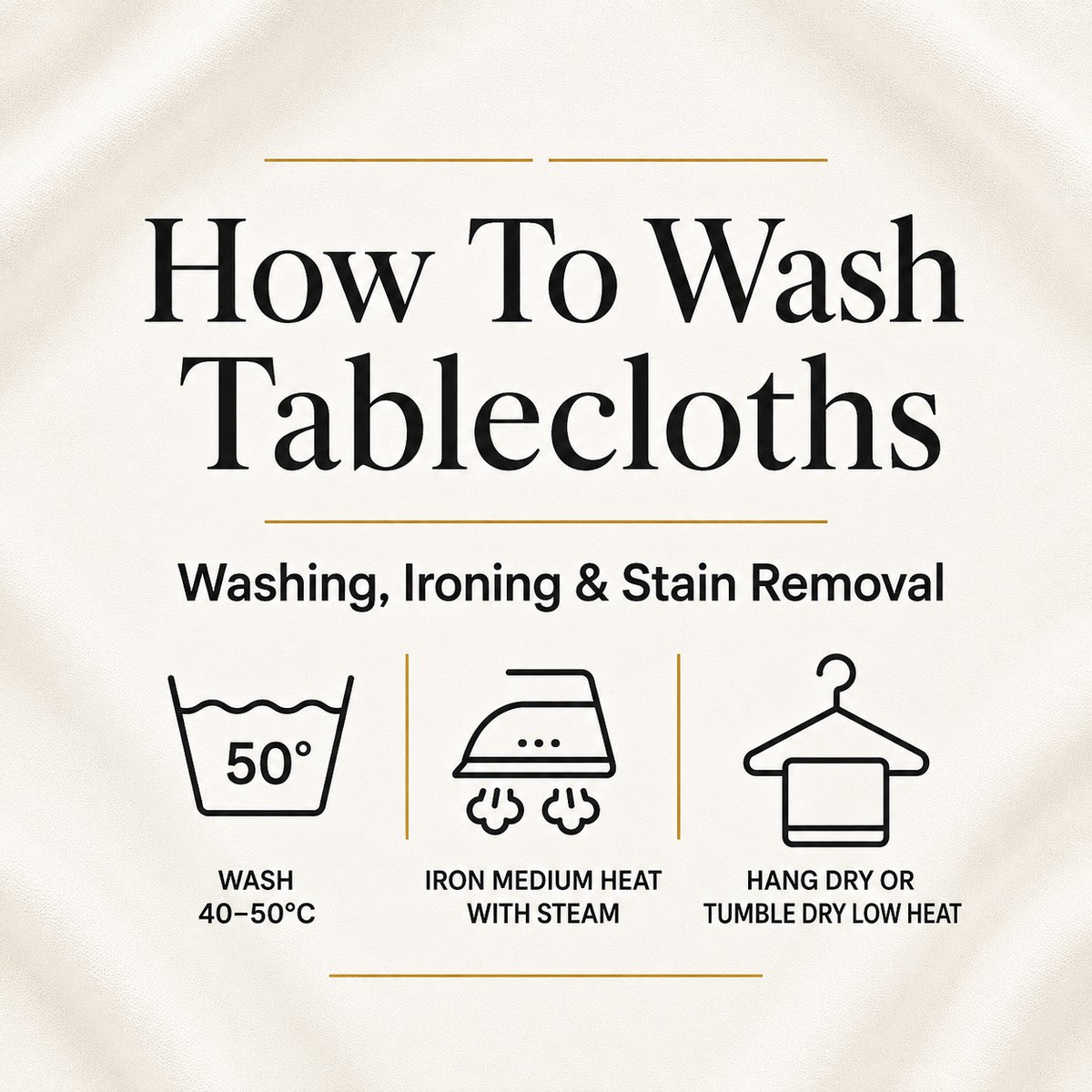
For best results, wash polyester tablecloths at 40–50°C maximum with a biological detergent. Use a short, low spin cycle and avoid overloading the washing machine.
- Wash: 40–50°C maximum
- Spin: short, low spin cycle — 800–1000 rpm maximum
- Dry: hang dry or tumble dry on the lowest heat setting until slightly damp
- Iron: iron slightly damp using steam on a medium temperature setting
This guide explains how to wash, dry, iron and remove stains from polyester tablecloths and napkins used in hotels, restaurants, hospitality venues, healthcare, events and the home.
Polyester Tablecloth Care Summary
Wash
Use 40–50°C maximum with biological detergent. Sort colours separately.
Spin
Use a short, low spin cycle. We recommend 800–1000 rpm maximum.
Dry
Hang dry or tumble dry on the lowest heat setting. Remove while slightly damp.
Iron
Iron slightly damp with steam. Start on a lower heat setting and increase gradually if needed.
Love Tablecloths care advice: Polyester tablecloths are soft, absorbent and durable, with a textured cotton-feel finish suitable for hospitality, hotels, restaurants, healthcare, events and home use.
Our polyester tablecloths are made for repeated use, with low colour loss, minimal shrinkage, reinforced hems and high-quality stitching to support a longer product life cycle.
All of our table linens are designed for commercial laundering. Polyester tablecloths dry faster than cotton, helping reduce drying time, processing time and long-term laundering costs.
Best Way to Wash Polyester Tablecloths
Before washing, shake out the tablecloths to remove cutlery, food residue and any foreign objects. Items such as knives, pens or sharp objects can permanently stain or damage the fabric and may also damage the washing machine.
| Best washing temperature | Wash polyester tablecloths and napkins at 40–50°C maximum. |
|---|---|
| Recommended detergent | Use biological detergent, especially for food, grease and oil stains. |
| Recommended spin speed | Use a short, low spin cycle. We recommend 800–1000 rpm maximum. |
| Drying method | Line dry where possible, or tumble dry on the lowest heat setting and remove while slightly damp. |
| Important warning | Do not wash or dry above 50°C. Excessive heat can cause permanent thermal shock creasing. |
How to Wash and Look After Polyester Tablecloths
- Sort by colour: wash white, light coloured, medium and dark shades separately to avoid cross staining.
- Do not mix fabric types: avoid washing 100% polyester tablecloths with cotton or polyester/cotton blends. Cotton lint can attach to polyester fabric and make it look like pilling or bobbling.
- Do not overload the washing machine: load the drum around three-quarters full so the tablecloths can move freely during the wash.
- Use biological detergent: this helps break down fats, oils and food stains during the washing cycle.
- Use the correct temperature: wash at 40–50°C maximum with a short, low spin cycle.
- Remove promptly: take tablecloths out of the machine as soon as the wash cycle has finished to reduce creasing.
Important: Polyester tablecloths and napkins should be washed at a temperature no higher than 50°C, with a short spin cycle setting of 800–1000 rpm maximum.
Final Rinse and Hygiene Care
A small amount of fabric softener in the final rinse may help reduce static and creasing. Avoid using too much, as a build-up of fabric conditioner can affect absorbency, touch and fabric feel.
For extra hygiene, a laundry sanitiser liquid can be added to the wash or final rinse, following the instructions on the product label. This is useful for table linen used in hospitality, healthcare, catering, events and busy commercial environments.
Do not rely on vinegar as a disinfectant for table linen. For hygiene-sensitive washing, use a suitable laundry sanitiser liquid instead.
How to Avoid Thermal Shock Creasing
High washing or drying temperatures above 50°C can cause permanent thermal shock creasing. This happens when hot, soft polyester fibres cool too quickly while crumpled in the machine.
The result can look like “broken ice” wrinkle marks on the fabric surface. These crease marks can become permanent and may not be removable by ironing.
Best practice: wash at 40–50°C maximum, use a low spin speed, avoid overloading, remove tablecloths promptly after washing, and dry on a low temperature setting.
How to Remove Stains from Polyester Tablecloths
For normal food staining, biological detergent is highly recommended. If fats and oils are not removed during washing and are then ironed, the heat can set the stain into the fabric and make it harder to remove later.
Heavy Stain Pre-Treatment
- Sponge or wipe the stained area with a small amount of undiluted biological detergent.
- Place the table linen into the washing machine with a full wash-load dosage of biological detergent.
- Set the wash programme to 40–50°C.
- Allow the washing machine to run for around 10 minutes, then pause the machine.
- Leave the items to soak for 8 hours or overnight.
- Unpause the machine and allow the wash programme to complete.
Oxygen-Based Stain Treatment
For residual staining, adding an oxygen-based bleaching agent with the laundry detergent may assist the washing process. Always follow the product instructions carefully. A product such as Vanish Oxi Action, or a supermarket home-brand equivalent, may be suitable.
Optical Brightening Agents
Detergents containing OBA, or Optical Brightening Agents, are best used on white table linen only. They can make white fabric appear brighter, but may alter the appearance of some coloured shades and give the impression of colour loss.
Chlorine Bleach Warning
Chlorine bleach, also known as sodium hypochlorite, can cause shade changes, permanent colour loss and fabric damage. It should be avoided on coloured polyester tablecloths. If required, only use a small quantity on white polyester shades.
Drying Polyester Tablecloths
Polyester tablecloths dry quickly because polyester holds less water than cotton after washing. Removing tablecloths promptly and drying them correctly will help reduce creasing before ironing.
Line Drying
Line drying is recommended where possible, especially for larger tablecloths. Hang the tablecloths as soon as the wash programme has finished. They should be ready to iron within a few hours.
Tumble Drying
If tumble drying, use the lowest heat setting and do not over dry. Remove the tablecloths while slightly damp and fold neatly straight away to reduce ironing time.
If available, use a Permanent-Press or Synthetics wash programme, with a low spin speed, to help reduce crushing and creasing.
Do not overload the tumble dryer. For best results, load the dryer to less than 50% capacity. This allows the tablecloths to circulate and dry evenly. Overloading, especially with large tablecloths, may cause permanent creasing or heat damage.
Large tablecloth advice: For large tablecloth sizes in domestic environments, line drying is usually safer than tumble drying. Iron the tablecloths while still slightly damp for the best finish.
How to Iron Polyester Tablecloths
Ironing is recommended for the best finish. Polyester tablecloths are easiest to iron when they are slightly damp. Steam and pressure from the iron help remove creasing more quickly.
- Start with the iron on the lowest heat setting that produces steam.
- Increase the temperature gradually until you find the best steam output.
- Use a fine water mist spray if extra moisture is needed.
- Always test a small area first before ironing the full tablecloth.
If the iron is too hot, it may scorch or melt the fabric. Avoid excessive heat and do not hold the iron in one position for too long.
Common Washing Mistakes to Avoid
- Washing polyester tablecloths above 50°C.
- Using a high spin cycle that crushes the fabric.
- Overloading the washing machine or tumble dryer.
- Mixing white, light and dark shades in the same wash.
- Washing polyester tablecloths with cotton items that may create lint.
- Ironing food, grease or oil stains before they have been fully removed.
- Using chlorine bleach on coloured tablecloths.
- Overusing fabric conditioner, which can affect absorbency and fabric feel.
- Relying on vinegar as a disinfectant instead of using a suitable laundry sanitiser liquid.
Frequently Asked Questions
What temperature should polyester tablecloths be washed at?
Polyester tablecloths should be washed at 40–50°C maximum. Washing above 50°C can increase the risk of permanent thermal shock creasing.
What spin speed should I use for polyester tablecloths?
Use a short, low spin cycle. We recommend 800–1000 rpm maximum to reduce crushing, hard crease lines and fabric damage.
Can polyester tablecloths be tumble dried?
Yes, but only on the lowest heat setting. Remove the tablecloths while slightly damp and avoid overloading the tumble dryer.
How do I remove grease and food stains from tablecloths?
Use biological detergent. For heavy stains, pre-treat the stained area with undiluted biological detergent, run the machine for around 10 minutes, pause and soak for 8 hours or overnight before completing the wash.
Should I use bleach on polyester tablecloths?
Chlorine bleach should be avoided, especially on coloured tablecloths, because it can cause shade changes, colour loss and fabric damage. Oxygen-based stain removers are usually safer when used according to the product instructions.
Why should I use biological detergent and avoid overloading the washing machine?
Biological detergent is recommended because it helps break down food, grease and oil stains during the wash. The washing machine should not be overloaded because tablecloths need enough space to move freely, allowing the water, detergent, heat and wash action to lift stains properly. Overloading can leave residual marks and cause hard crease lines in the fabric.
Can I use fabric softener on polyester tablecloths?
Yes, a small amount of fabric softener may help reduce static and creasing. Do not use too much, as fabric conditioner build-up can affect absorbency, touch and fabric feel. For extra hygiene, use a suitable laundry sanitiser liquid and follow the product instructions.
Can I use vinegar to disinfect tablecloths?
Do not rely on vinegar as a disinfectant for table linen. For hygiene-sensitive washing, use a suitable laundry sanitiser liquid and follow the product instructions.
How do I stop tablecloths creasing badly?
Do not overload the washing machine, use a low spin cycle, remove the tablecloths promptly after washing, dry on low heat or line dry, and iron while slightly damp.
Can I wash polyester tablecloths with cotton table linen?
It is best not to wash 100% polyester tablecloths with cotton or polyester/cotton blends. Cotton lint can attach to the polyester surface and make the fabric look bobbled.
Need Help Choosing the Correct Tablecloth Size?
For tablecloth size advice, measure the table length and width for square or rectangular tables. For round tables, measure the table top diameter. Our size guide explains the correct tablecloth size and drop for common table shapes.
View Tablecloth Size Guide Shop Premium TableclothsNeed Further Assistance?
For washing, care or tablecloth size advice, please send us a message or give us a call.
We Love To Talk: Free Phone 0800 612 1379
Sales Lines Open: Monday–Friday 9:00am–5:00pm